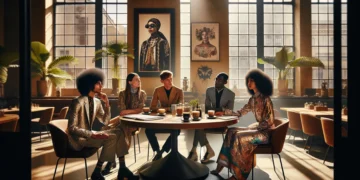

Entertainment districts have shifted from tidy shopping corridors to layered ecosystems where culture, tech, and social life play off one another. Urban planners now chase engagement, not just sales, because memories bring people back. The Urban Land Institute reported a 34 percent lift in repeat visits compared with standard retail. Cities like Las Vegas, London, and San Francisco treat these places as cultural anchors that lift nearby neighborhoods. Leisure today is tactile and story driven, commercial yet communal, often in the same breath. The same logic appears online, where platforms outline simple steps for users, such as the Vegastars sign up process, to enter their own curated entertainment spaces.
The Shift from Retail to Experience-Centric Design
Traditional retail on its own cannot carry a district anymore. DLR Group notes that when activities are present, 68 percent of visitors stay beyond two hours. That extra time comes from layered offerings, art beside dining, wellness beside performance, each piece nudging the next. Digital tools help by turning passive displays into live interactions, so the place feels awake. Local character matters too, from adaptive facades to community art. Retail still plays a role, but it now supports the shared moment rather than stealing the spotlight.
Immersive Technology Integration
Technology has become the scaffolding for multisensory urban life. At The Midway in San Francisco, projection mapping and AI follow movement and rewrite visuals in real time, raising engagement by 52 percent. Across Asia, full-dome LED halls host art shows at noon and esports by night, a quick pivot that audiences have come to expect. Digital platforms mirror this logic, shifting scenes in response to user behavior. The larger goal is simple enough, emotion through immersion.
The Rise of Experiential Districts as Standalone Destinations
What once lived on the edge of a city now sits at the center of tourism strategy. AREA15 in Las Vegas occupies over 200,000 square feet with installations, performances, and themed dining, drawing more than 1.7 million visitors annually, according to World XO in 2023. Outernet London turns its core into a civic gallery, part lab, part stage. These places organize themselves around narrative, not racks and registers. People still want spectacle, but meaning seems to hold their attention longer.
Community-Focused Urban Planning and Adaptive Reuse
Placemaking has matured toward inclusivity, sustainability, and reuse. El Dorado’s Murphy Arts District folds historic structures into new performance and dining spaces, and local authorities reported a 27 percent rise in tourism receipts in 2022. Cleveland’s Playhouse Square, rebuilt through public and private backing, now supports more than 2,000 jobs a year. The throughline is identity with utility, civic spaces that invite participation rather than only applause. Digital tools extend that work, helping visitors plan, respond, and plug into citywide events.
Future-Proofing Through Flexibility
The most resilient districts pivot fast. Markets by day, concerts by night, forums the morning after. DLR Group finds that multiuse venues with flexible infrastructure post about 20 percent higher occupancy on average. Modular architecture, pop-up theaters, and projection surfaces let operators refresh without starting over. As new cultural formats and online extensions arrive, the physical and digital reinforce each other instead of competing.
Conclusion on Responsible Direction
The promise here is cultural energy and real economic lift, but only with an ethical spine. Innovation should bring people together and keep access broad. Designers can prioritize creativity, dialogue, and social connection, then check the impulse to isolate with novelty for novelty’s sake. Aim for operations that respect the environment, share benefits equitably, and practice digital mindfulness. If those pillars hold, experiential districts can serve as the social theaters modern cities actually need.
One of the most significant developments in recent years has been the latest technological advancements that are shaping the future. These changes are not only transforming the way we live but also influencing a variety of sectors including healthcare, finance, and education.
Furthermore, these innovations are being widely adopted by different industries, paving the way for unprecedented efficiency and growth opportunities.